Thursday, October 30, 2008

Isaac Newton


Isaac Newton-
He was born on January 4 1643 and died on March 31 1727. Newton’s first major public scientific achievement was the invention, design and construction of a reflecting telescope. As mathematician, Newton invented integral calculus, and jointly with Leibnitz, differential calculus. He also calculated a formula for finding the velocity of sound in a gas which was later corrected by Laplace. Newton made a huge impact on theoretical astronomy. He defined the laws of motion and universal gravitation which he used to predict precisely the motions of stars, and the planets around the sun. Using his discoveries in optics Newton constructed the first reflecting telescope.

Source:http://www.lucidcafe.com/library/95dec/newton.html

Galileo Galilei


Galileo Galilei-
He was born on February 15 1564 and died on January 8 1642. Improved telscope, looked at moons, studied jupiter and its moons, studied sun spots and went blind, thought sun did not revolve around the earth.

Source: Movie

Tycho Brahe


Tycho Brahe-
He was born on December 14, 1546 and died on October 24, 1601. He made a remarkable star catalogue of over 1000 stars. This was not the biggest catalogue in the number of stars, but in accuracy. His improvements of methods and accuracy in observations was very significant. He proved that comets are not objects in the atmosphere. He showed irregularities in the moons orbit. His wall quadrant and other instrument became widely copied and lead to improved stellar instruments. Kepler used Tycho Brahe's observations when he constructed his famous laws of planetary movement.

Source: http://www.nada.kth.se/~fred/tycho/index.html

Copernicus


Copernicus-
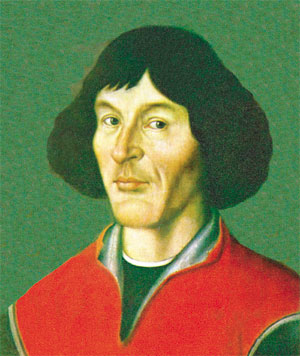
He was born February 19, 1473 and died on May 24, 1543. He was a mathematician and astronomer who proposed that the sun was stationary in the center of the universe and the earth revolved around it. Disturbed by the failure of Ptolemy's geocentric model of the universe to follow Aristotle's requirement for the uniform circular motion of all celestial bodies and determined to eliminate Ptolemy's equant, an imaginary point around which the bodies seemed to follow that requirement, Copernicus decided that he could achieve his goal only through a heliocentric model.

Source: http://plato.stanford.edu/entries/copernicus/

Wednesday, October 29, 2008

Henrietta Leavitt


Henrietta Leavitt-
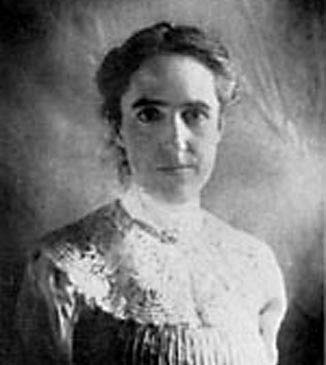
She was born on July 4, 1868 and died December 12, 1921.During her career, Leavitt discovered more than 2,400 variable stars, about half of the known total in her day. These stars change from bright to dim and back fairly regularly. Leavitt's work with variable stars led to her most important contribution to the field: the cepheid variable period-luminosity relationship. By intense observation of a certain class of variable star, the cepheids, Leavitt discovered a direct correlation between the time it took a star to go from bright to dim to how bright it actually was. Knowing this relationship helped other astronomers, such as Edwin Hubble, to make their own groundbreaking discoveries.

Leavitt also developed a standard of photographic measurements that was accepted by the International Committee on Photographic Magnitudes in 1913, and called the Harvard Standard. To do this she used 299 plates from 13 telescopes and used logarithmic equations to order stars over 17 magnitudes of brightness. She continued refining and enlarging upon this work throughout her life.

Source: http://www.pbs.org/wgbh/aso/databank/entries/baleav.html

James Van Allen


James Van Allen-
He was born September 7, 1914 and died August 9, 2006. He received his Ph.D. in physics from the University of Iowa in 1939 and was a Research Fellow at the Carnegie Institution of Washington's Department of Terrestrial Magnetism until 1942. As a Navy officer during World War II, he worked at the Johns Hopkins University Applied Physics Laboratory (APL), where he helped develop the proximity fuse, and then sailed with the Pacific Fleet to advise on the use and operation of this important device. After the war, he worked at APL on instrumenting V-2 rockets for scientific research and on various rocket- and balloon-borne instruments for studying cosmic rays at high altitudes and high latitudes. He also headed the development of the first sounding rocket, the Aerobee. In 1951 he returned to the University of Iowa as Head of the Department of Physics and Astronomy, where he remained an active and respected scientist and teacher.

Albert Michelson-
He was born in December of 1852. He performed early measurements of the velocity of light with amazing delicacy and in 1881 he invented his interferometer for the purpose of discovering the effect of the Earth's motion on the observed velocity. In cooperation with Professor E.W. Morley, and using the interferometer, it was shown that light travels at a constant speed in all inertial systems of reference. The instrument also enabled distances to be measured with greater accuracy by means of the length of light-waves.

Source: http://nobelprize.org/nobel_prizes/physics/laureates/1907/michelson-bio.html

Tuesday, October 28, 2008


Pope Gregory XIII- He was born January 7, 1502 and died 
April 10, 1585. He is best known for creating the Gregorian calendar, which is the calendar still in use in the West today. According to the Julian calendar, the year is 365 days. So, in 1582 Gregory simply "deleted" 10 days from the new calendar, which now included "leap days" in order to make up for more accumulated time in the future.

Source: http://atheism.about.com/library/glossary
/western/bldef_gregoryxiii.htm

Stephen Hawking-  He was born January 8, 1942. He hasn't died yet.Stephen Hawking has worked on the basic laws which govern the universe. With Roger Penrose he showed that Einstein's General Theory of Relativity implied space and time would have a beginning in the Big Bang and an end in black holes. These results indicated it was necessary to unify General Relativity with Quantum Theory, the other great Scientific development of the first half of the 20th Century.

Source:http://www.hawking.org.uk
/home/hindex.html

Carl Sagan


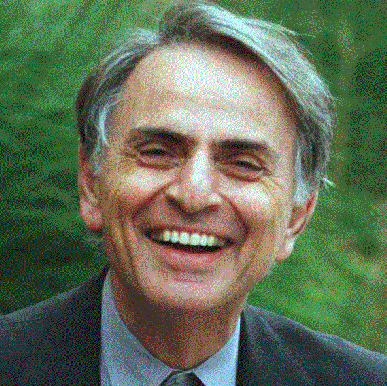
Carl Sagan- He was born November 9, 1934 and died December 20, 1996. He was a consultant and adviser to NASA since the 1950's, briefed the Apollo astronauts before their flights to the Moon, and was an experimenter on the Mariner,VikingVoyager, and Galileo expeditions to the planets. He helped solve the mysteries of the high temperatures of Venus, the seasonal changes on Mars, and the reddish haze of Titan. A consultant and adviser to NASA since the 1950's, briefed the Apollo astronauts before their flights to the Moon, and was an experimenter on the Mariner,VikingVoyager, and Galileo expeditions to the planets. He helped solve the mysteries of the high temperatures of Venus, the seasonal changes on Mars, and the reddish haze of Titan.

Source:http://www.carlsagan.com/

Ptolemy

Ptolemy- He was born after AD 85 and died in AD 165. One of the most influential Greek astronomers and geographers of his time, Ptolemy propounded the geocentric theory. He made astronomical observations from Alexandria in Egypt during the years AD 127-41. His first observation was made on March 26, 127 AD.
Source: http://www-groups.dcs.st-and.ac.uk/
~history/Biographies/Ptolemy.html

Hipparchus


Hipparchus-
He was born in 190 BC and died in 120 BC. He is know for his commentary on the astronomical poem of Aratus, the Commentary on the Phainomena of Eudoxus and Aratus. He also contributed to the making of  an astronomical calendar, books on optics and arithmetic,  geographical and astrological writings, and a catalogue of his own work.
Along with writing, he employed geometrical models, including the deferent-epicycle and eccentric previously used by Apollonius . One of his contributions appears to have been the incorporation of numerical data based on observations into the geometrical models developed to account for the astronomical motions.

Sourcehttp://www.hps.cam.ac.uk/starry/hipparchus.html

Aristotle


Aristotle-
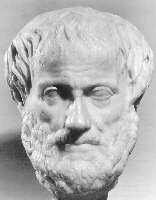
He was born in  384 BC and died in 322 BC. He was the first to create a comprehensive system of Western philosophy, encompassing morality and aesthetics, logic and science, politics and metaphysics. 

Source: http://www.philosophypages.com/ph/aris.htm